
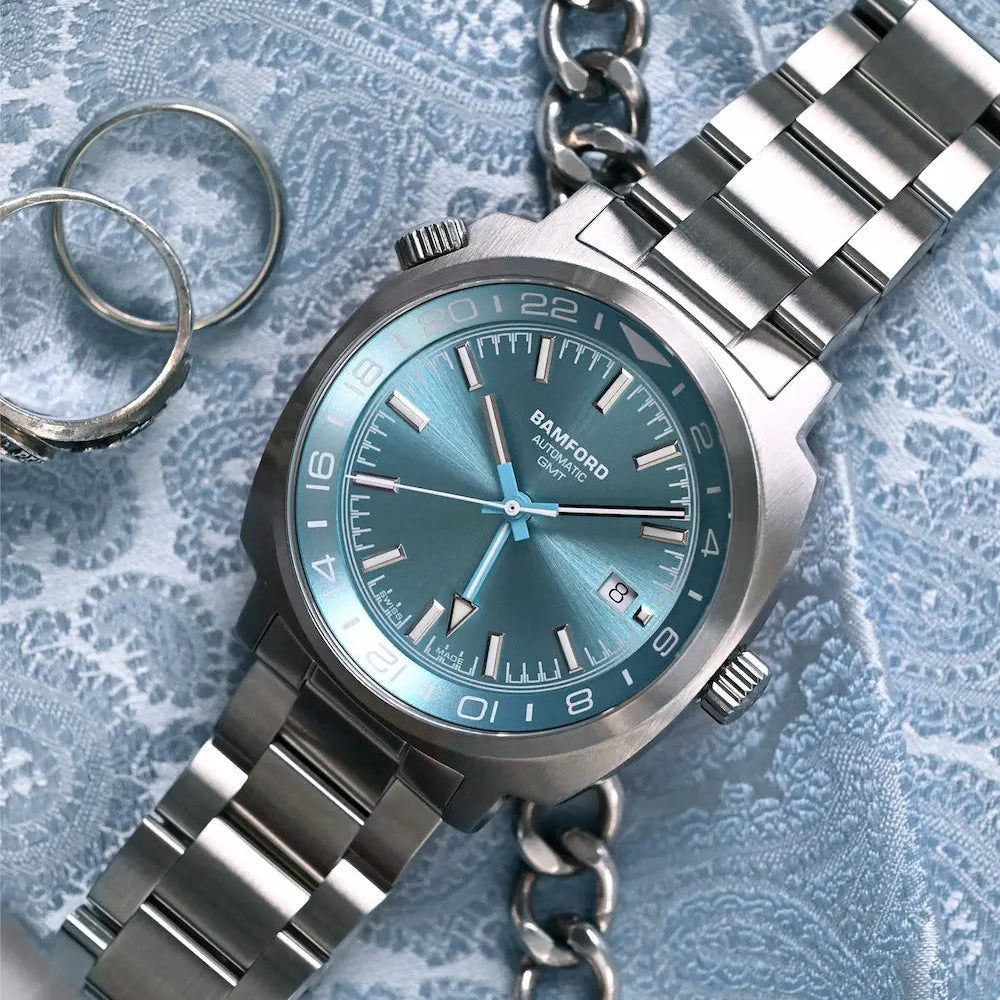
What is a GMT Watch?
A GMT watch is a watch that can display a second time zone alongside the local time. Most GMT watches do this using an additional hand that completes one full rotation every 24 hours and points to a separate 24-hour scale on the dial, chapter ring or bezel.
The name comes from Greenwich Mean Time, the historic reference time used in navigation, aviation and international travel. Although Coordinated Universal Time, or UTC, is now the modern global standard, the term GMT remains widely used in watchmaking.
How Does a GMT Watch Work?
A conventional watch divides the day into two 12-hour periods. Its hour hand completes two full rotations every 24 hours, which means the dial alone does not distinguish between morning and evening.
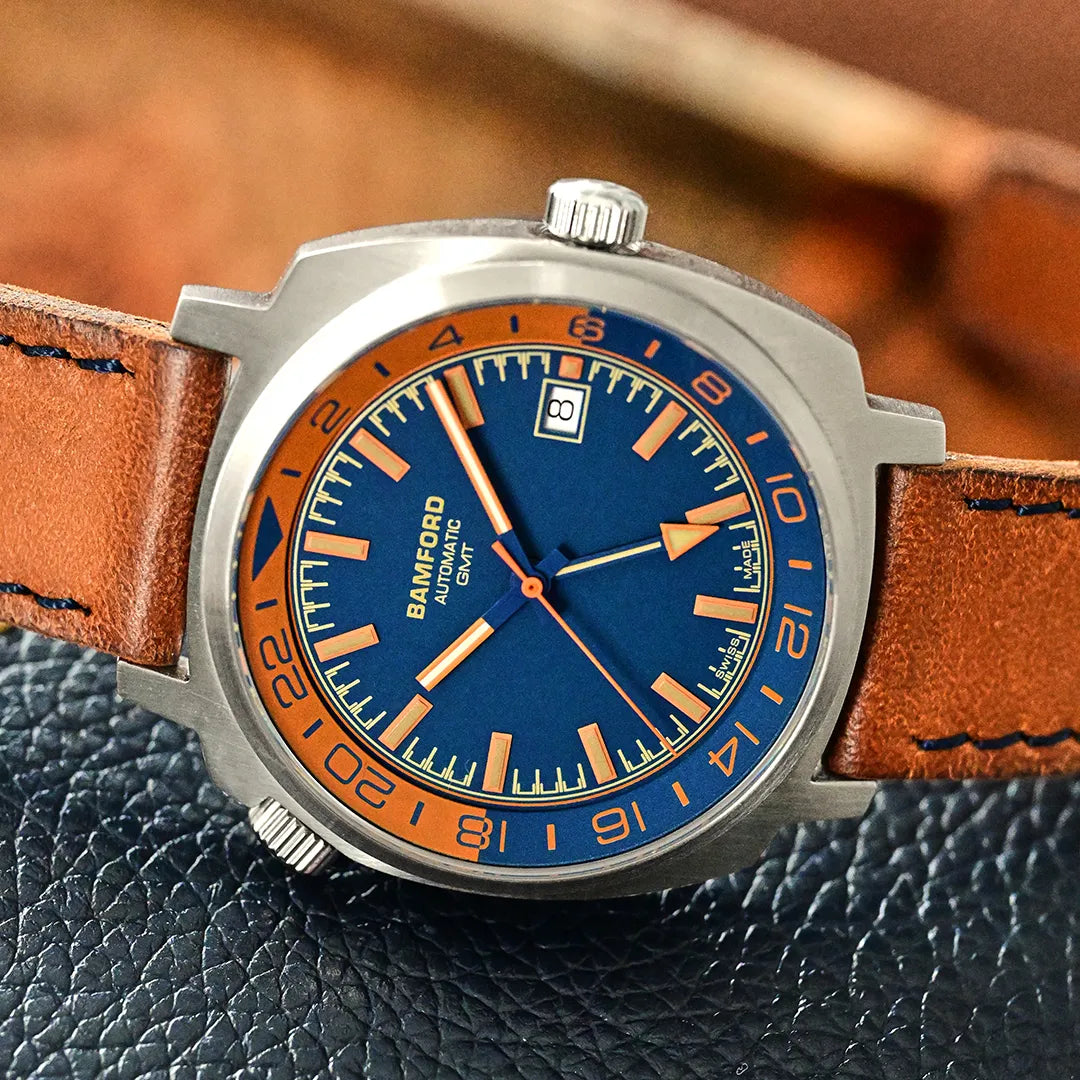
A GMT watch adds a second hour display geared to complete one rotation every 24 hours. This additional GMT hand points to a scale numbered from 1 to 24, allowing the wearer to read another time zone while continuing to use the conventional hour and minute hands for local time.
For example, the main hands might show 10:00 in London while the GMT hand points to 18 on the 24-hour scale, indicating that it is 6pm in another location.
The use of a 24-hour scale also makes it immediately clear whether the second time zone is in the morning or evening.
Explore The Range
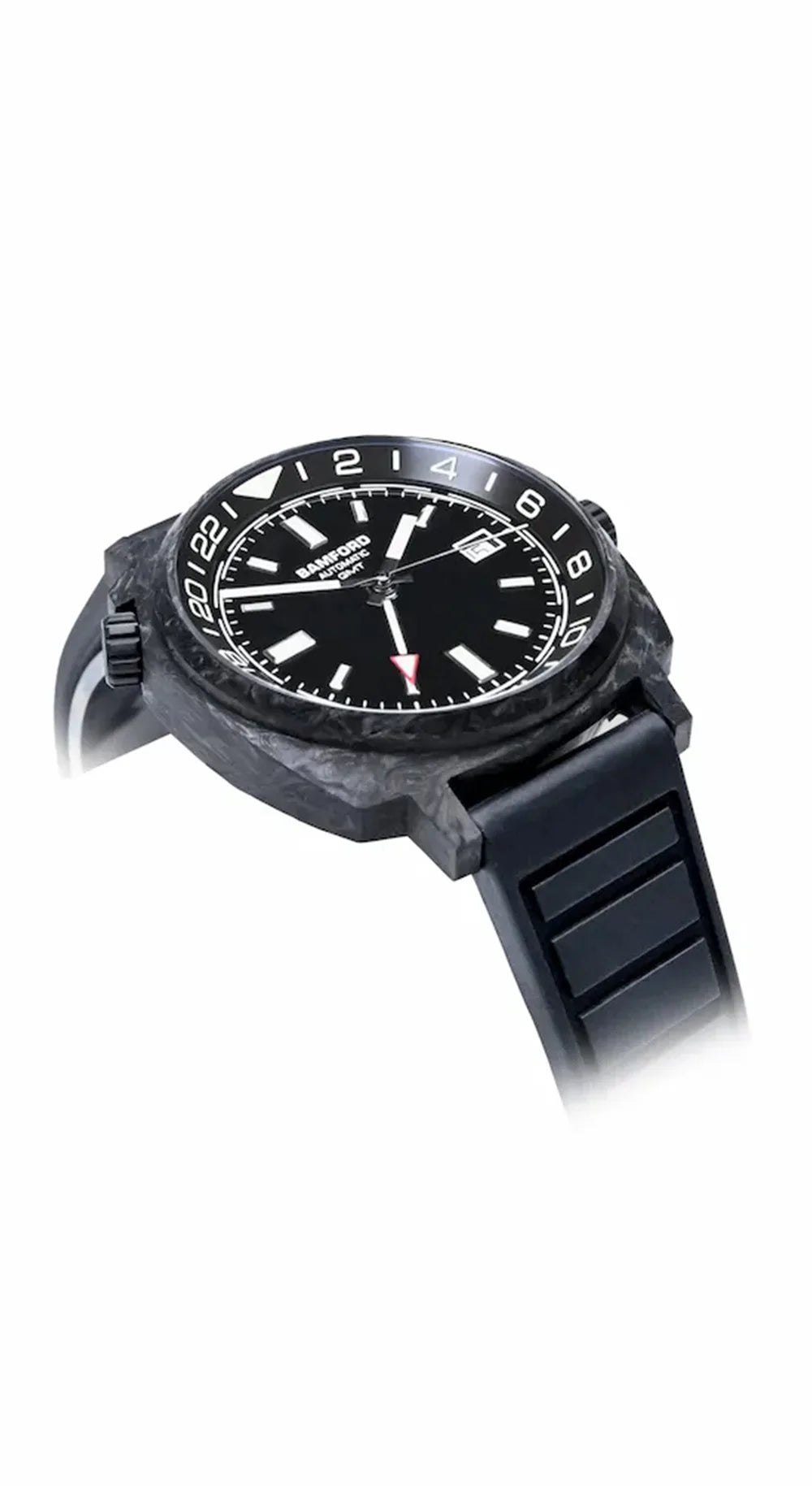
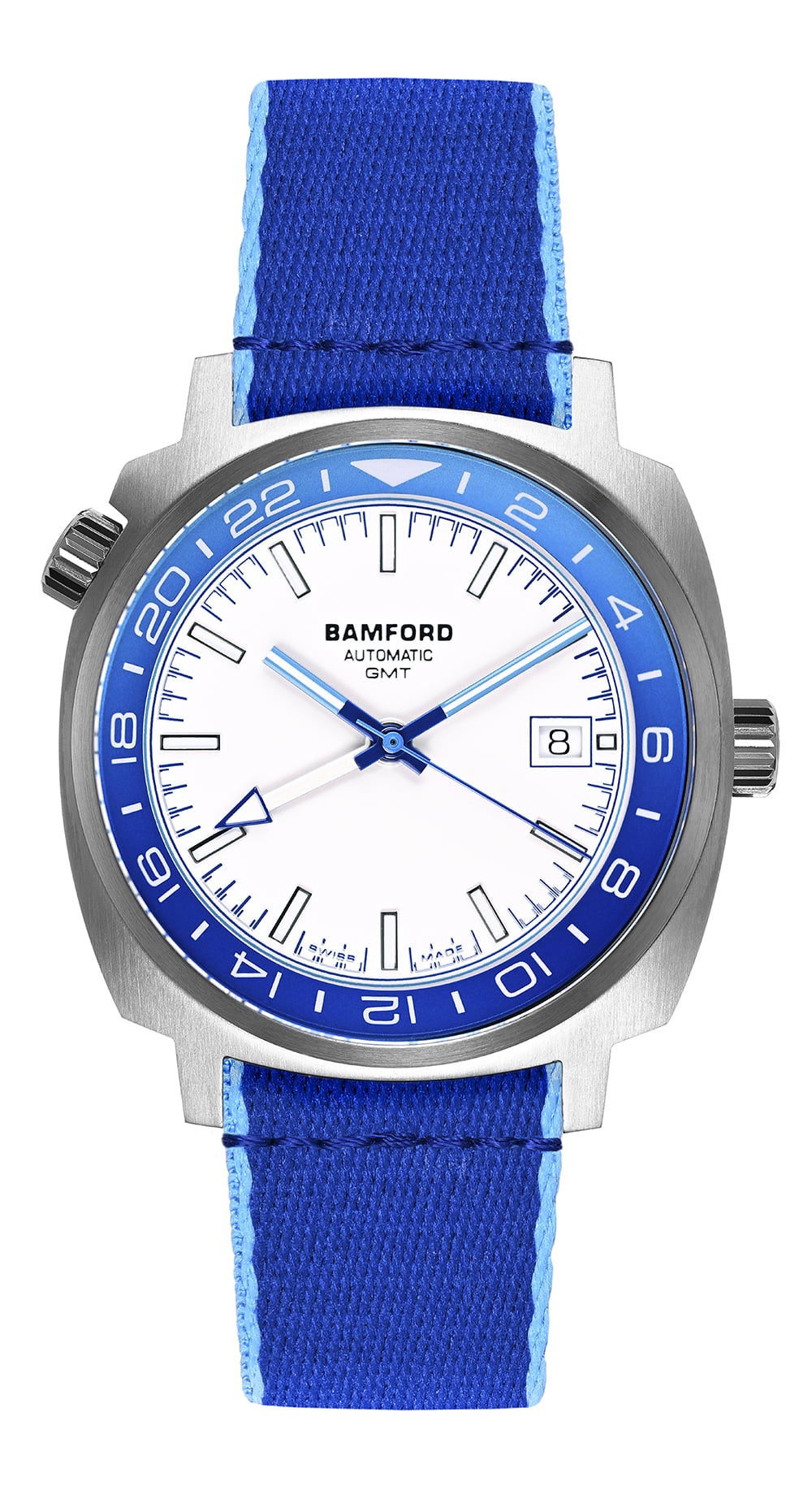
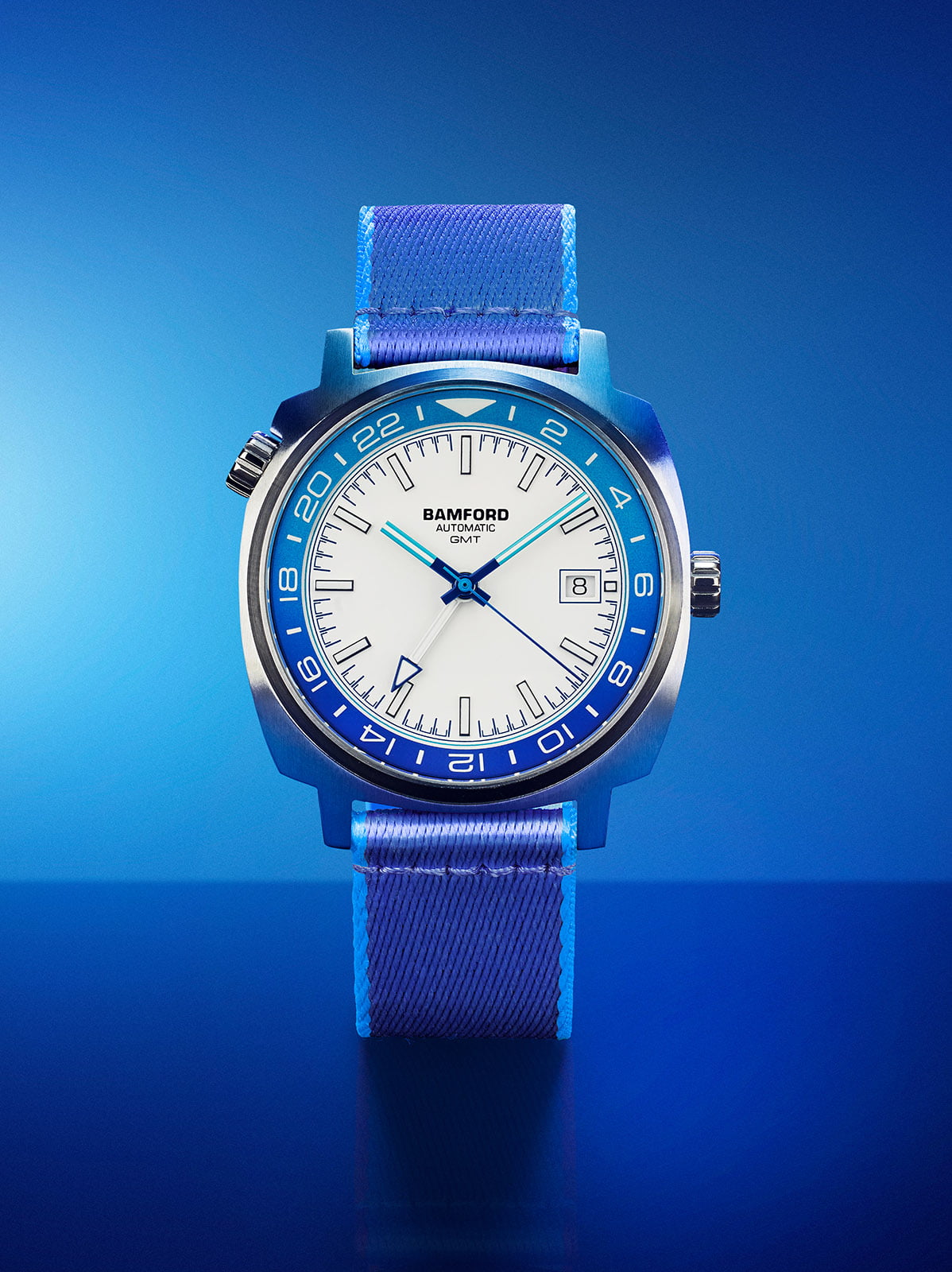
Bamford London GMT
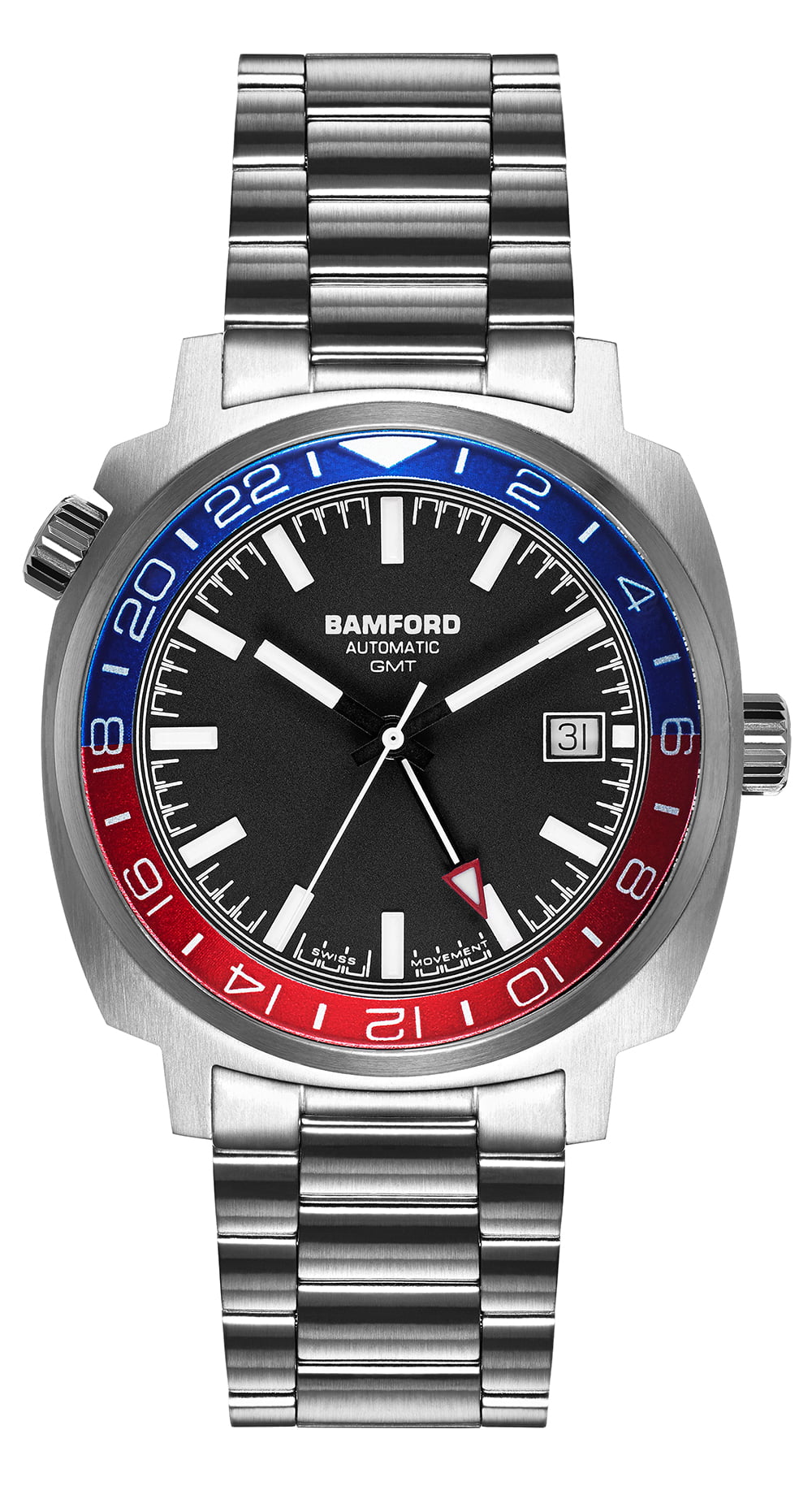
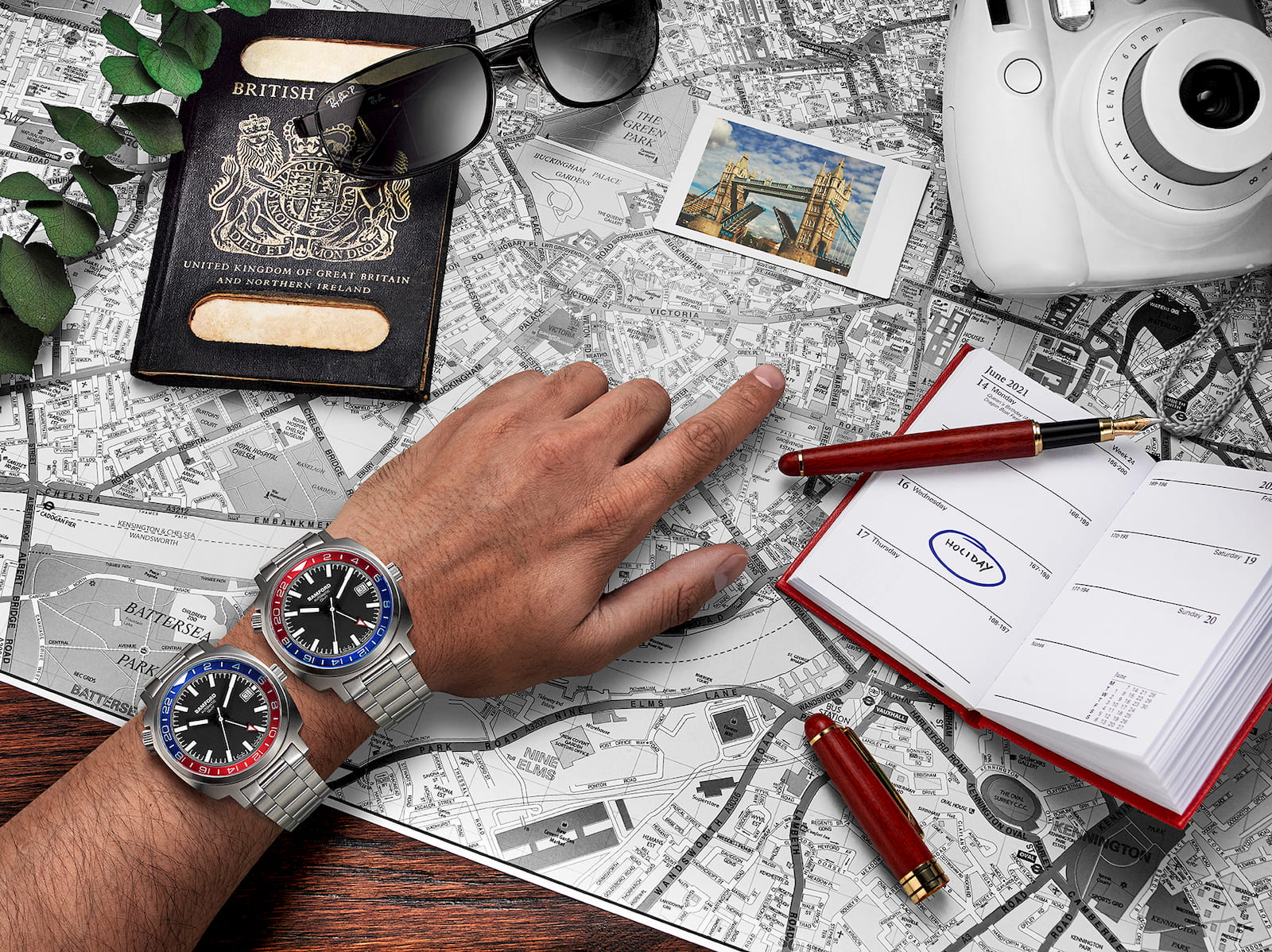


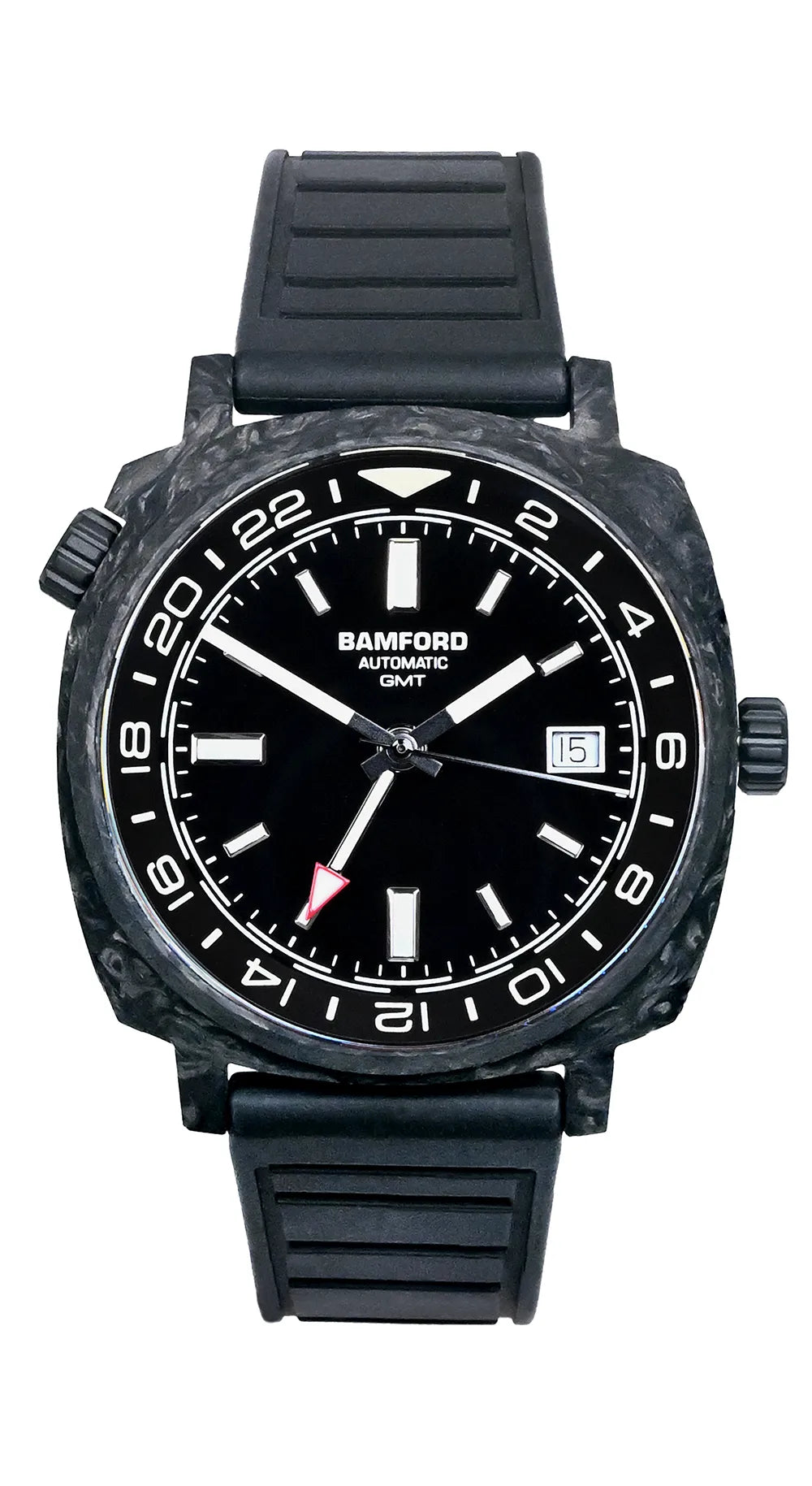
Traveller GMT and Caller GMT Watches
GMT movements generally fall into two main categories: traveller GMTs and caller GMTs.
On a traveller GMT, sometimes called a flyer or true GMT, the conventional local hour hand can be adjusted independently in one-hour increments. The GMT hand remains fixed to a reference time, usually the wearer’s home time.
This makes a traveller GMT particularly convenient when crossing time zones. On arrival, the wearer can move the local hour hand forwards or backwards without stopping the watch or disturbing the minute hand and GMT display.
On a caller GMT, also known as an office GMT, the conventional hour and minute hands remain fixed while the 24-hour GMT hand is adjusted independently.
This type of GMT watch is useful for following a second location while remaining in the same time zone, such as keeping track of an overseas office, client or family member.
Neither system is inherently better. A traveller GMT is usually more convenient for frequent travel, while a caller GMT is well suited to monitoring another time zone from home.
What Does the GMT Bezel Do?
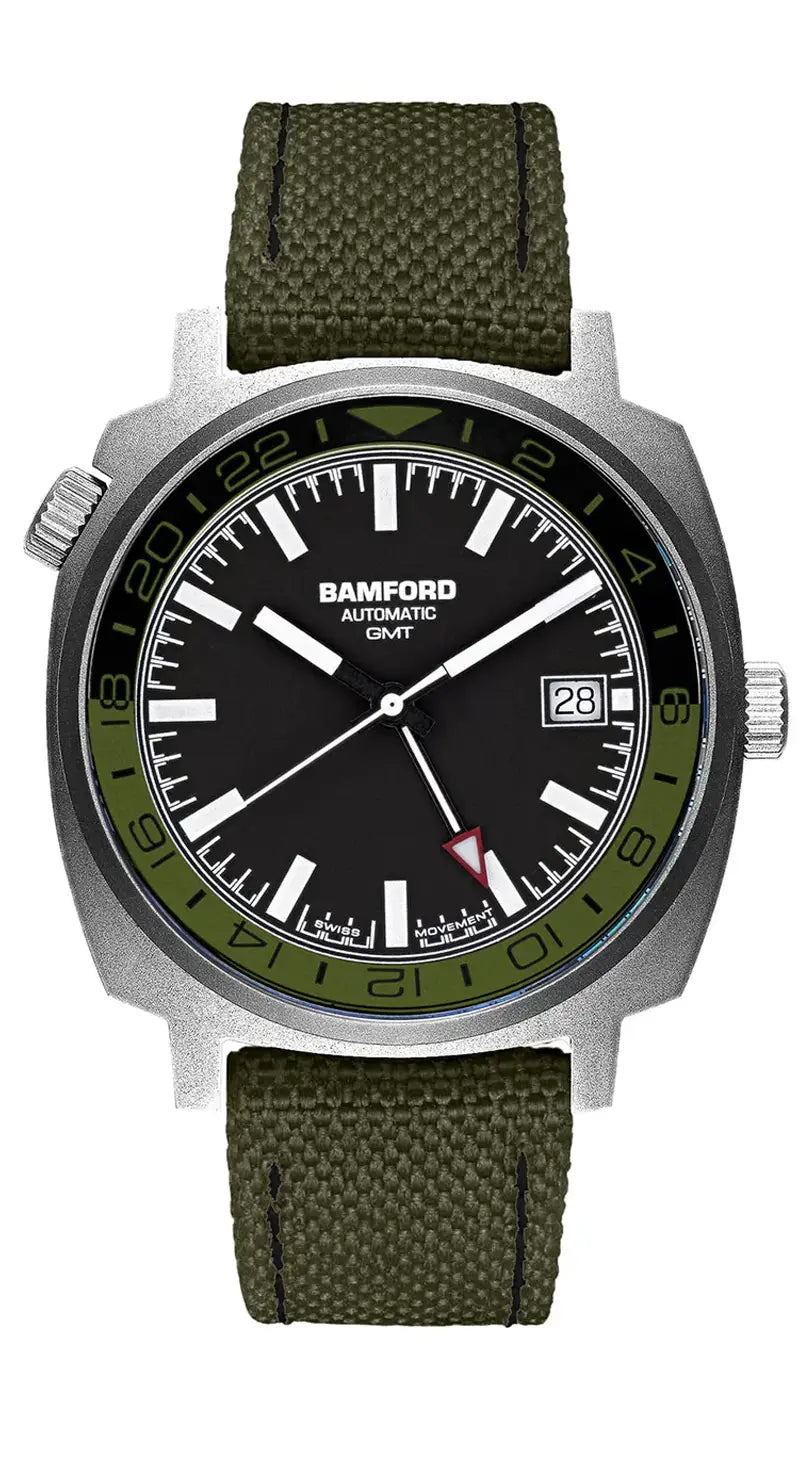
Some GMT watches include a rotating bezel marked with a 24-hour scale.
When the bezel is in its standard position, the GMT hand can be read directly against it to display a second time zone. Rotating the bezel changes the scale in relation to the GMT hand, which may allow the wearer to reference a third time zone.
For example, the conventional hands could display local time, the GMT hand could show home time, and the rotated bezel could be used to calculate the time in another city.
Not every GMT watch has a rotating bezel. Some use a fixed 24-hour bezel, while others print the scale directly onto the dial or around its outer edge.

GMT Watches and Aviation
GMT watches became closely associated with international aviation during the 1950s.
As commercial long-haul travel expanded, pilots needed a practical way to follow local time while also keeping track of a fixed reference time. A watch displaying two time zones allowed flight crews to coordinate schedules, navigation and communications more easily across different parts of the world.
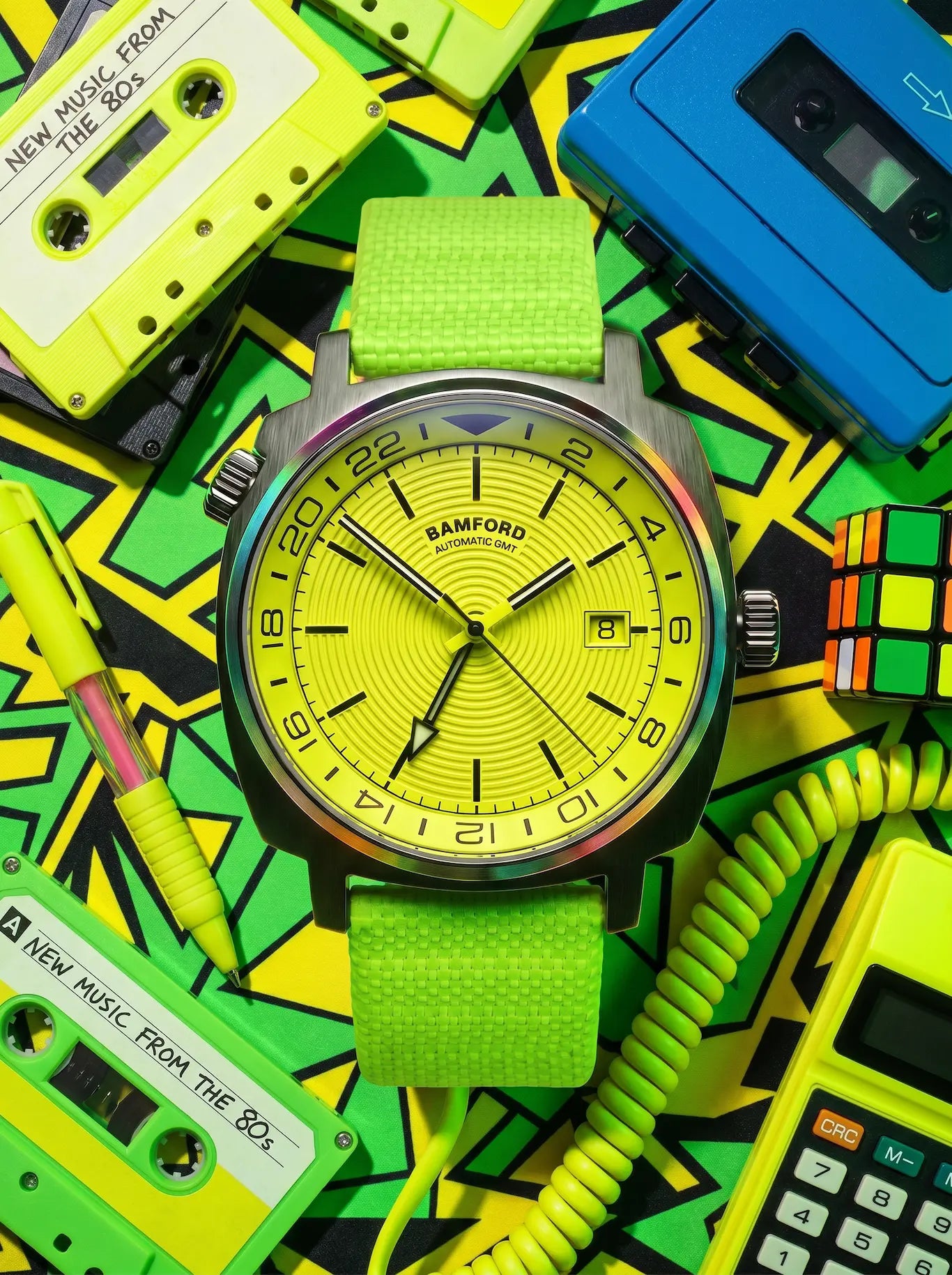
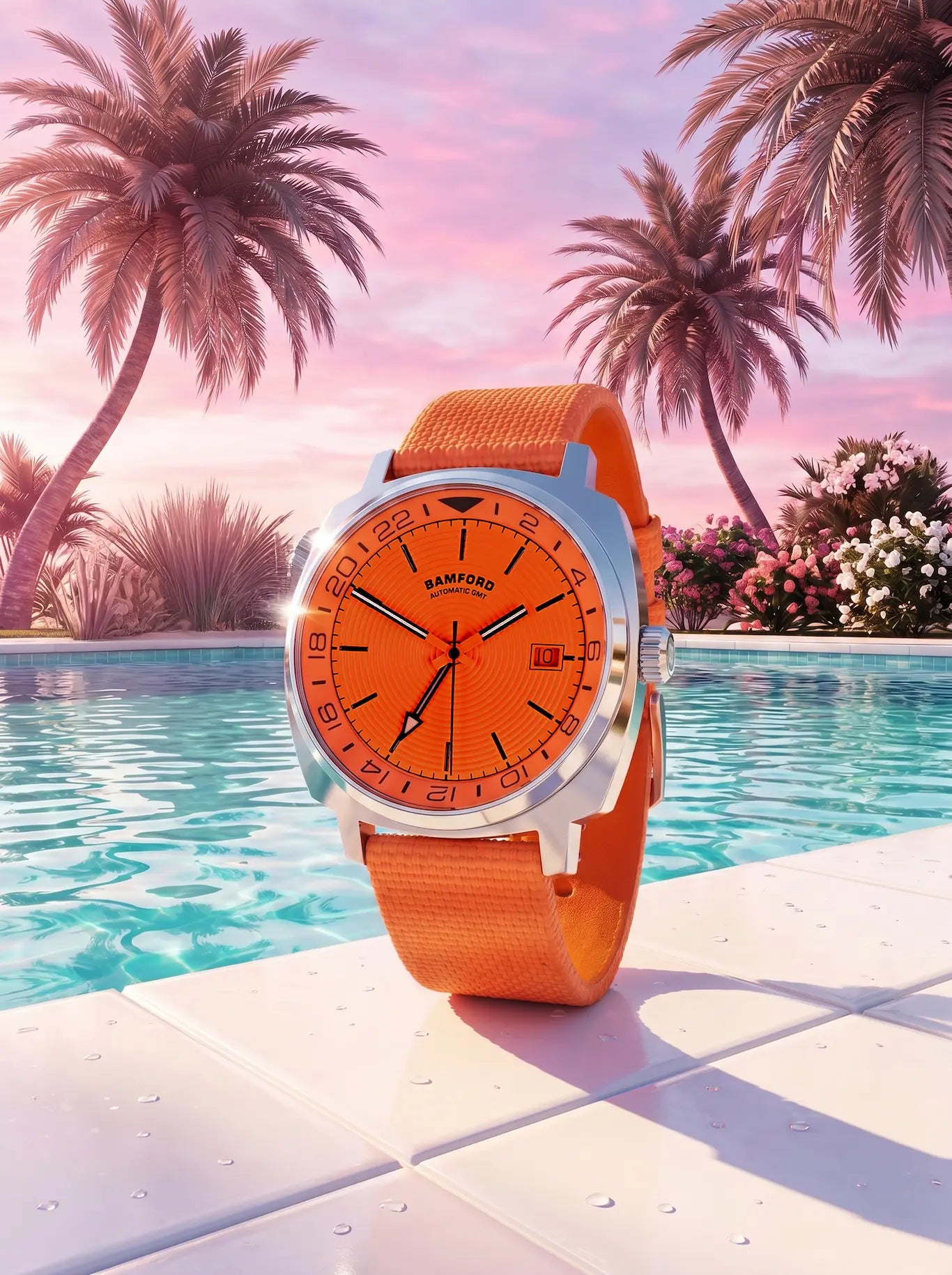
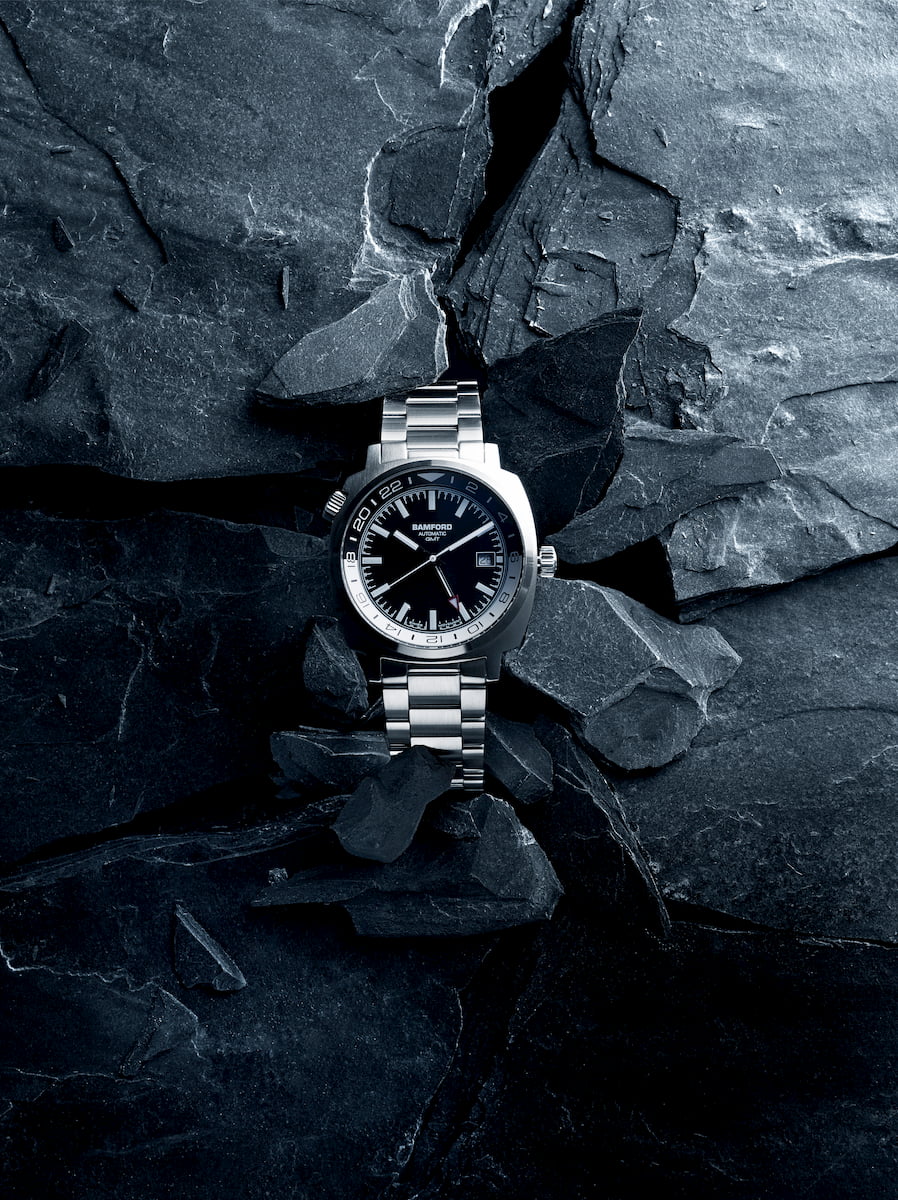
This aviation connection remains an important part of GMT watch design. Many modern GMT watches continue to feature highly legible dials, prominent 24-hour hands and contrasting day-and-night markings inspired by their functional origins.

Why Choose a GMT Watch?
A GMT watch is useful for anyone who regularly travels, works internationally or wants to follow the time in another part of the world.
It can help the wearer keep track of home while abroad, avoid calling someone at an inconvenient hour or coordinate meetings across different time zones.
Beyond its practical purpose, the GMT complication also adds another layer of visual and mechanical interest. The additional hand, 24-hour scale and rotating bezel give watch designers more opportunities to use colour, contrast and typography while retaining a clear functional purpose.
For many collectors, this balance of practical utility, travel heritage and distinctive design makes the GMT one of the most versatile complications in modern watchmaking.
FAQ
No. A GMT watch normally displays one additional time zone, while a world timer is designed to show the time across multiple global time zones, often using a rotating 24-hour ring and a display of major cities.
It depends on the movement. On a traveller GMT, the GMT hand is normally set to a reference time and the local hour hand is adjusted when travelling. On a caller GMT, the conventional hands show local time and the GMT hand is adjusted to display the second time zone.
Some can. When a GMT watch has a rotating 24-hour bezel, the conventional hands can show local time, the GMT hand can display a second time zone and the bezel can be rotated to reference a third.
Not necessarily. The GMT hand can usually be set to any chosen time zone. Many wearers use it for their home time, but it can also be set to the location of an office, family member or travel destination.
Yes. A GMT watch can be useful for following another country’s business hours, coordinating international calls or keeping track of friends and family abroad.
GMT stands for Greenwich Mean Time, while UTC stands for Coordinated Universal Time.
In everyday watch use, the two are often treated as equivalent because they normally show the same clock time. Technically, however, GMT is a time standard historically based on the position of the sun, while UTC is an atomic time standard used for modern international timekeeping.
Watchmakers continue to use the term GMT because of its long association with navigation, aviation and mechanical watches.